
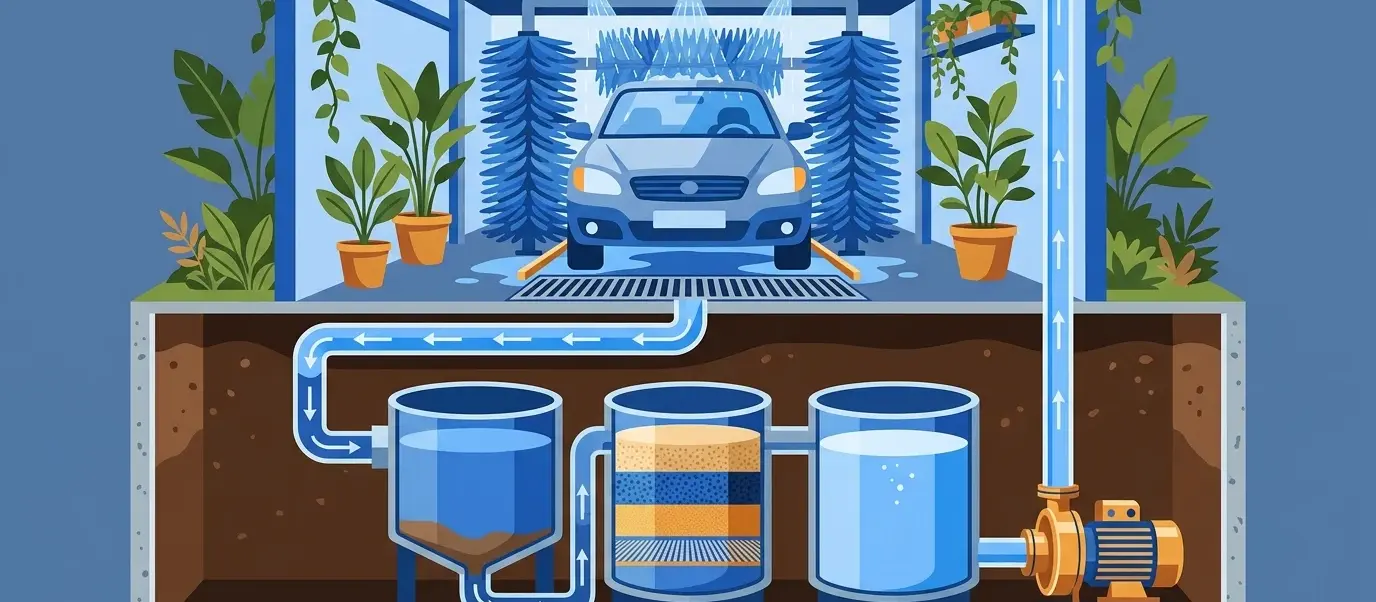
Washing a car is not just about how much water you use. Where the dirty water goes matters as much.
Driveway Washing and Storm Drains
Wash water from a driveway carries soap, brake dust, oil and metals into the street drain. Under the federal Clean Water Act, storm drains in most cities lead to local creeks, rivers or the ocean without treatment, which is why many cities ask residents to wash on grass or gravel, or to use a commercial wash. See the EPA's stormwater program.
Advertisement
Why a Professional Wash Is Often Greener
- Commercial washes send wastewater to the sanitary sewer or treat it, instead of the storm drain.
- Many reclaim and filter part of their water for reuse in early wash stages.
- High-pressure nozzles use less water per car than an open hose. Industry estimates put a modern automatic or tunnel wash at roughly 15–60 gallons of fresh water per car, depending on equipment and reclaim.
- The WaterSavers program from the International Carwash Association lists washes that meet water-use and treatment standards.
Greener Options at Home
- Rinseless wash: one bucket, a lubricating concentrate and microfiber towels, with no runoff.
- Waterless spray for light dust.
- If you hose wash: park on grass, use a shut-off nozzle, and use a phosphate-free soap.
During Drought Restrictions
Water districts in drought often limit home car washing but allow commercial washes that recycle. Check your water utility's current rules.